


chevron_left
-
 play_arrow
Icon Radio
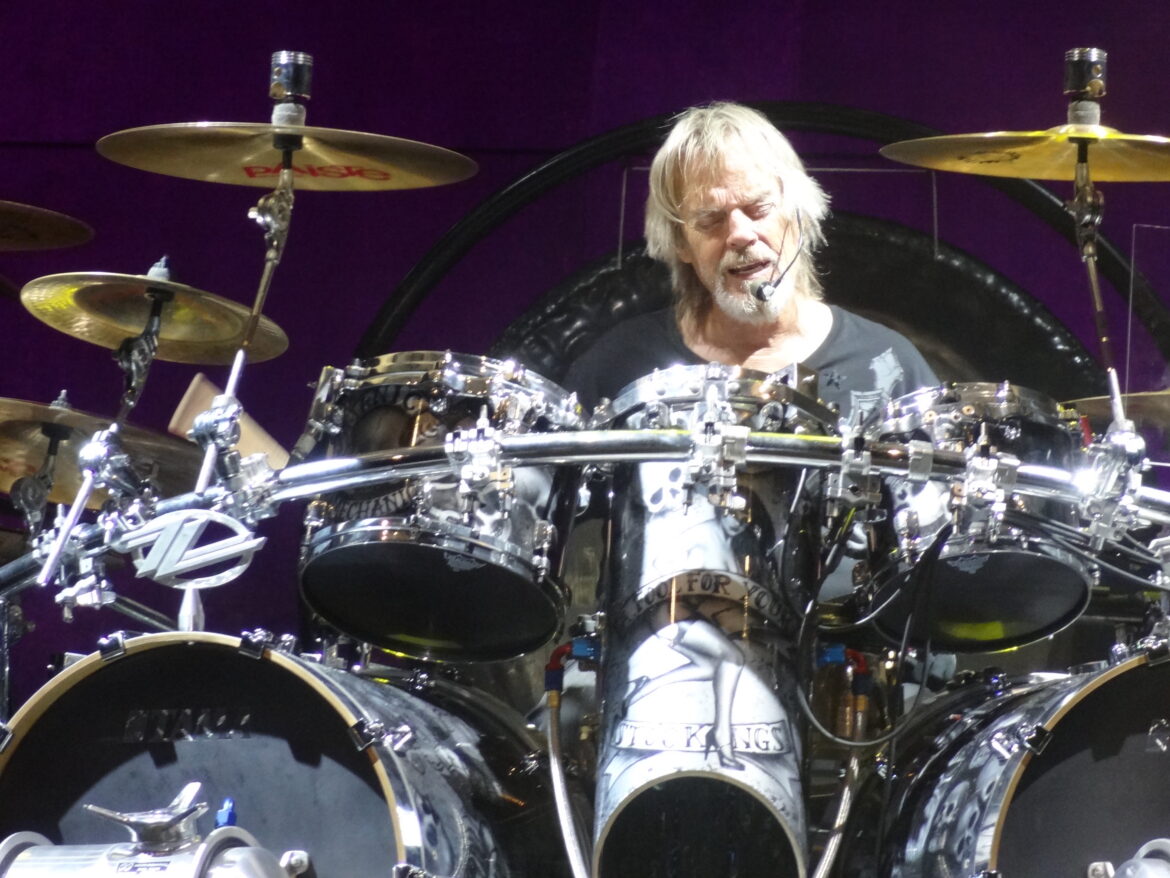
ICON RADIO REMEMBERS: Frank Beard – The Rhythmic Heartbeat of ZZ Top
Frank Beard never needed to be the loudest or most visible member of ZZ Top. That was never the drummer’s job.
 Billy Gibbons had the growling guitar, the unmistakable voice and the sly grin. Dusty Hill brought the bass, the harmonies and a stage presence that perfectly matched Gibbons. Together, the two men became instantly recognizable, with their long beards, sunglasses and carefully synchronized moves.
Behind them sat Frank Beard… the only member of ZZ Top whose last name promised facial hair he didn’t have.
It was one of rock and roll’s great visual jokes. But once the music started, there was nothing ironic about Beard’s contribution. His firm backbeat, deep pocket and unmistakable Texas shuffle were the engine underneath one of the most enduring bands in rock history.
- Advertisement -
Beard died August 17, at the age of 77. He had been receiving hospice care at his ranch in Richmond, Texas, and was surrounded by members of his family. His death brings another painful goodbye for ZZ Top fans, five years after the loss of bassist Dusty Hill in 2021.
For more than half a century, Beard gave ZZ Top its pulse.
Born Frank Lee Beard on June 11, 1949, in Frankston, Texas, he began playing drums as a teenager and worked his way through the active Dallas music scene of the 1960s. He and Hill played together in groups including the Warlocks, the Cellar Dwellers and American Blues.
They even spent time performing as part of an unauthorized touring version of the British band the Zombies—one of the stranger footnotes in rock history and the sort of story that could only make sense in the anything-goes music business of the late 1960s.
The experience helped establish a musical connection between Beard and Hill that would eventually become central to ZZ Top. Beard joined Billy Gibbons’ developing Houston-based group in 1969. When the band needed a new bass player, he recommended his old friend Dusty.
The classic lineup was in place.
ZZ Top’s First Album arrived in 1971, followed by Rio Grande Mud a year later. The band found its commercial breakthrough with 1973’s Tres Hombres, an album that included “La Grange.” Built around a riff that seemed to roll out of a hot Texas roadhouse, the song captured what ZZ Top did best: blues with extra weight, swagger and just enough mischief.
Beard’s drumming was essential to that sound. He could play hard without crowding the song. His performances weren’t about squeezing the greatest possible number of notes into every bar. They were about feel—putting each beat in exactly the right place and giving the guitar and
- Advertisement -
bass room to breathe. That restraint can be deceptive. Making something sound simple is rarely simple.
Listen to “Tush,” released on Fandango! in 1975. The whole track moves with the confidence of a band that knows it has nothing to prove. Beard locks in with Hill, Gibbons leans into the riff, and the song is finished before it has a chance to wear out its welcome. It is direct, economical and immediately recognizable.
That was the magic of ZZ Top. The songs sounded loose, but the band was remarkably precise. Gibbons, Hill and Beard understood one another’s instincts. Beard could push the music forward without rushing it and sit deep in the groove without allowing it to drag. That balance became part of the band’s fingerprint.
After becoming a major concert attraction during the 1970s, ZZ Top took an extended break. Beard later spoke openly about the addiction problems he faced during that period and his decision to enter rehabilitation. It was a difficult chapter, but not the end of his story. He emerged sober and remained part of the band as it prepared for an unlikely second act.
By the early 1980s, popular music was changing. Synthesizers, drum machines and music videos were transforming rock and pop. Many successful groups from the previous decade struggled to adjust. ZZ Top did the opposite.
The band incorporated new technology without surrendering its identity. The result was 1983’s Eliminator, a blockbuster that introduced ZZ Top to an enormous new audience. “Gimme All Your Lovin’,” “Sharp Dressed Man” and “Legs” sounded modern, polished and perfectly suited to MTV, but the old Texas machinery was still running underneath.
The cars, spinning guitars, mysterious women and instantly identifiable videos made Gibbons and Hill international stars. Beard rarely received the same visual attention, but his rhythmic discipline helped bridge the two versions of ZZ Top: the gritty blues-rock trio of the 1970s and the sleek, electronic hitmakers of the 1980s.
That ability to change without becoming unrecognizable is one reason the music lasted.
Over the course of its recording career, ZZ Top released 15 studio albums and sold more than 50 million records. The group earned seven Top 10 albums in the United States, scored multiple Number One rock singles and was inducted into the Rock & Roll Hall of Fame in 2004.
Through it all, Beard remained the man behind the kit.
Away from the stage, he made his home in Texas with his wife, Debbie, and their family. He enjoyed golf and cars and became known for participating in community and charitable events. That relatively quiet life seemed suited to a musician who was famous around the world but never appeared particularly interested in acting like a celebrity.
 The bond between ZZ Top’s three members endured for decades. From 1969 until Hill’s death in 2021, the Gibbons-Hill-Beard lineup remained intact—an extraordinary achievement in a business known for arguments, departures and endless personnel changes.
When Hill died, the band continued with longtime guitar technician Elwood Francis playing bass, honouring Hill’s wish that ZZ Top carry on. Beard remained behind the drums, preserving a direct connection to the band’s earliest days.
Health concerns had forced Beard to step away from some performances in recent years, including dates on ZZ Top’s 2026 tour. Following his death, Gibbons remembered him as a great friend, collaborator and naturally innovative drummer.
“His signature backbeat was key to keeping ZZ on top,” Gibbons said.
It is difficult to find a better summary.
- Advertisement -
Drummers sometimes receive less attention because their best work serves the song rather than interrupts it. Frank Beard embodied that approach. He wasn’t there to compete with the riff. He made the riff hit harder. He wasn’t there to overpower the groove. He was the groove.
His playing gave ZZ Top its strut. It made the band’s music feel heavy without becoming sluggish, polished without becoming sterile and playful without losing its power.
There is a reason those records still sound so good coming through the radio. From the opening seconds of “La Grange” to the polished drive of “Gimme All Your Lovin’,” they carry a physical momentum. You feel them before you analyze them.
That feeling begins with an ICONIC rhythm. Frank Beard spent more than five decades providing it… steady, inventive and unmistakably Texan. The man without the famous beard was never merely the person sitting behind ZZ Top.
He was the heartbeat.
Similar posts
-
 Now playing
