



chevron_left
-
 play_arrow
Icon Radio
ICON RADIO REMEMBERS: Tim Curry – Remembering The Voice, the Villains, and the Icon
Tim Curry never seemed interested in giving an audience half a performance.
Whether he was stalking through a gothic castle in fishnets, turning a board game into comic chaos, terrorizing a small town from behind a clown’s painted smile or sailing alongside the Muppets, Curry brought total commitment to every role. His characters could be outrageous, frightening, hilarious and strangely charming, sometimes all within the same scene. He had a voice that could curl around a line like smoke, a smile that suggested he knew something the rest of us did not, and the rare ability to make even the most extravagant performance feel completely under control.
Curry died peacefully at his home in Toluca Lake, Los Angeles, on August 25, 2026. He was 80. No cause of death was immediately announced.
His death closes a remarkable career that lasted more than five decades and moved freely across theatre, film, television, animation, music and audiobooks. For millions, he will always be Dr. Frank-N-Furter in The Rocky Horror Picture Show. For others, he is Wadsworth in Clue, Pennywise in It, Darkness in Legend, Rooster in Annie, the hotel concierge in Home Alone 2 or Long John Silver in Muppet Treasure Island. A younger generation may know him first as the voice of Nigel Thornberry, Captain Hook or one of the many animated villains who became instantly more interesting the moment Curry began to speak.
- Advertisement -
The roles were wildly different, but the attraction was always the same. Tim Curry made a choice, committed to it and dared everyone watching to look away.
A Voice Built for the Stage
Timothy James Curry was born on April 19, 1946, in Grappenhall, Cheshire, England. His father, James, was a Methodist chaplain in the Royal Navy, and his mother, Patricia, worked as a school secretary. His father’s military life meant the family moved frequently, including time in Hong Kong, before eventually settling in Plymouth.
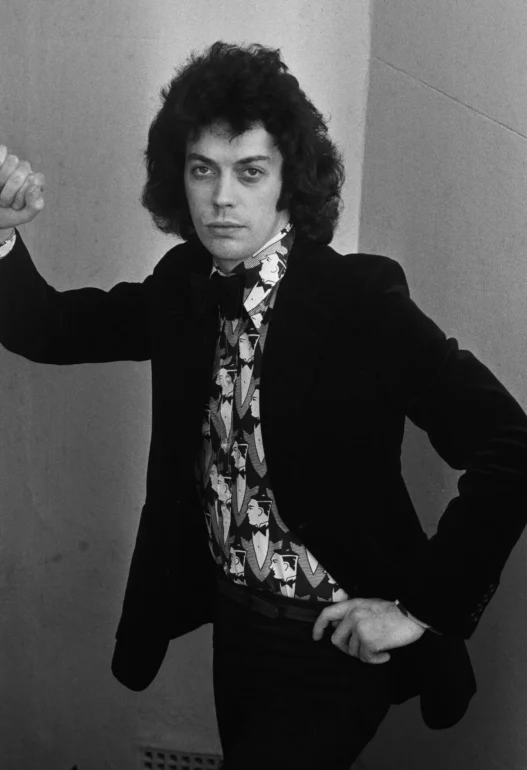
Music arrived early. Curry sang as a boy soprano and developed the strong, expressive voice that would later become one of his trademarks. After his father died when Curry was 12, he attended Kingswood School in Bath and eventually studied English and drama at the University of Birmingham, graduating in 1968.
That same year, he landed a place in the original London cast of Hair. Curry later acknowledged that he had claimed professional experience and union credentials he did not yet possess. By the time the producers discovered the truth, his talent had already persuaded them to help him secure his membership. It was a fitting beginning for an actor whose career would repeatedly reward nerve, instinct and the willingness to take a risk.
The production also brought Curry into the orbit of Richard O’Brien, who was developing a strange new musical inspired by science-fiction films, B-movie horror, glam rock and sexual liberation. That project became The Rocky Horror Show, and the role of Dr. Frank-N-Furter changed Curry’s life.
The Sweet Transvestite Who Changed Everything
When The Rocky Horror Show opened in a small upstairs theatre at London’s Royal Court in 1973, there was no way to predict what it would become. The show was loud, funny, provocative and gleefully unruly. At its centre stood Curry as Frank-N-Furter, the corseted scientist from Transsexual, Transylvania, who welcomed Brad and Janet into a world where every certainty could be questioned.
Curry’s creation was more than camp spectacle. He gave Frank aristocratic authority, rock-star swagger, comic timing and an undercurrent of danger. The voice was famously inspired in part by an exaggerated upper-class English accent, as though the Queen herself had wandered into a glam-rock laboratory. Curry did not wink at the character from a safe distance. He played Frank with conviction, and that conviction made the performance thrilling.
- Advertisement -
He reprised the role in the 1975 film adaptation, The Rocky Horror Picture Show. Its initial theatrical release was not a major success, but midnight screenings transformed it into a cultural institution. Audiences returned in costume, shouted responses at the screen, threw props and turned every showing into a communal performance. Decade after decade, the movie offered outsiders a place to gather and permission to experiment with identity, sexuality and self-expression.
Curry sometimes regarded the phenomenon with dry amusement, but he understood what it meant to people. Frank-N-Furter became one of cinema’s most recognizable characters, and Curry’s performance influenced generations of actors, musicians, drag performers and fans. It was a role so vivid it could easily have trapped the man who created it. Instead, Curry spent the rest of his career proving how much else he could do.
Making Villainy Irresistible
Hollywood quickly recognized that Curry could bring unusual energy to a villain. In the 1982 film version of Annie, he played Rooster Hannigan alongside Carol Burnett and Bernadette Peters, turning greed and scheming into musical comedy. In Ridley Scott’s Legend in 1985, he disappeared beneath elaborate prosthetics and towering horns as the Lord of Darkness. Curry’s deep, deliberate delivery gave the character grandeur and sensual menace.
That same year brought Clue, in which Curry played Wadsworth, the increasingly frantic butler trying to contain a mansion full of suspects, secrets and bodies. The film’s rapid-fire dialogue and multiple endings demanded exact timing. Curry became its engine. His breathless final explanation, delivered while racing from room to room and reconstructing the night’s absurd chain of events, remains one of the great comic demonstrations of controlled chaos.
Then came Pennywise.
In the 1990 television miniseries adaptation of Stephen King’s It, Curry turned a circus clown into a lasting source of childhood nightmares. Television standards limited how graphic the horror could be, so much of Pennywise’s power depended on performance. Curry could sound playful one moment and predatory the next. A smile, a pause or a slight change in his voice was enough to reveal the ancient evil underneath the greasepaint.
Comedy, Adventure and a Pirate Among Muppets
Curry’s gift for menace never prevented him from embracing silliness. He appeared as the suspicious concierge in Home Alone 2: Lost in New York, brought swagger to Cardinal Richelieu in The Three Musketeers and rarely allowed a supporting role to pass unnoticed.
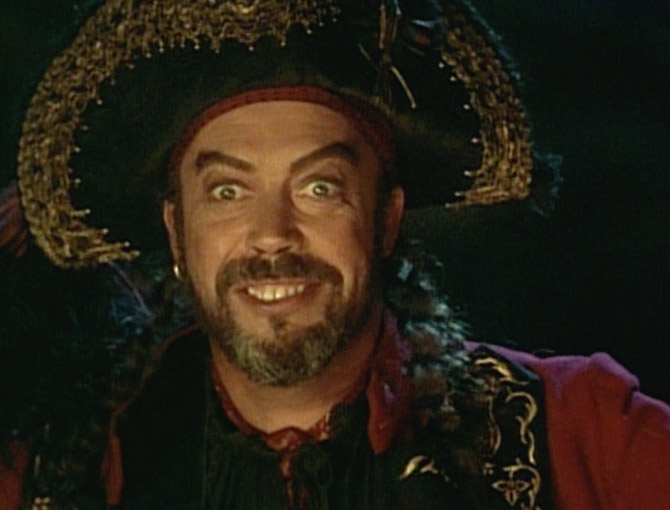
One of his most beloved performances came in 1996’s Muppet Treasure Island. As Long John Silver, Curry found the perfect balance between theatrical villain, affectionate scene partner and full-blooded pirate. He treated the Muppets as fellow actors and matched their energy without condescension. His Silver was funny, dangerous and unexpectedly tender, introducing Curry to children who would discover the darker corners of his career years later.
A Career You Could Hear
Even when Tim Curry was nowhere to be seen, he was unmistakable.
His voice career was vast. He won a Daytime Emmy in 1991 for playing Captain Hook in Peter Pan and the Pirates. He voiced Hexxus, the seductive spirit of destruction in FernGully: The Last Rainforest, and became Nigel Thornberry in The Wild Thornberrys, delivering the character’s booming eccentricity to a new generation. His credits also included Duckman, Gargoyles, The Mask, Sonic the Hedgehog, Star Wars: The Clone Wars and dozens of other animated series, films and games.
Curry’s vocal instrument could be silky, thunderous, comic, cultured or grotesque. He understood that a voice still needed rhythm, intention and emotional life. He was also an accomplished audiobook narrator, lending his theatrical delivery to works by authors including Lemony Snicket and Garth Nix.
Tim Curry, Rock Singer
Acting made Curry famous, but music was never a sideline he stumbled into by accident. In the late 1970s and early 1980s, he released three studio albums for A&M Records: Read My Lips, Fearless and Simplicity.
The records drew from rock, pop, cabaret, reggae and rhythm and blues. His voice carried theatrical weight, but Curry did not approach the songs as novelty pieces. He sang with grit and confidence, backed by serious musicians and sharp arrangements. The 1979 album Fearless produced his best-known solo track, “I Do the Rock,” a witty, propulsive survey of celebrity culture that allowed Curry to combine his instincts as singer, actor and satirist.

Songs including “Paradise Garage” and “Birds of a Feather” showed a performer testing the boundary between character and singer. Commercial superstardom did not follow, something Curry later joked about, but the albums developed a loyal following and proved that his voice alone could command the spotlight.
Back Where He Began
Throughout his screen career, Curry continued returning to the stage. He played Mozart in the original Broadway production of Amadeus, earning the first of his three Tony Award nominations. He was nominated again for the musical My Favorite Year and later for his performance as King Arthur in Monty Python’s Spamalot.
His stage credits also included Travesties, The Pirates of Penzance and The Threepenny Opera, and he earned two Laurence Olivier Award nominations. In 2015, the Actors Fund honoured him at its annual Tony Awards viewing party in Los Angeles, a rare public appearance following the severe stroke he suffered in 2012.
Resilience, Humour and Showing Up
The stroke required brain surgery and left Curry with significant mobility challenges. He used a wheelchair and later spoke openly about the continuing effects on his movement and short-term memory. His public life changed, but his wit did not.
- Advertisement -
Curry continued voice work, appeared at fan conventions and participated in special events. In 2016, he returned to the world of Rocky Horror as the criminologist in Fox’s television production, supporting Laverne Cox as she stepped into the role he had made famous. He also joined a 2020 virtual table read and attended events celebrating the film’s 50th anniversary in 2025.
Fans continued to describe his kindness, dry humour and generosity. Curry did not turn his recovery into a grand public campaign. His example was quieter: he kept engaging, working when he could and showing up. In 2025, he published his memoir, Vagabond, looking back on his childhood, travels and unpredictable life in performance.
An Original to the End
Tim Curry’s legacy cannot be contained in a single character, even one as immortal as Frank-N-Furter.
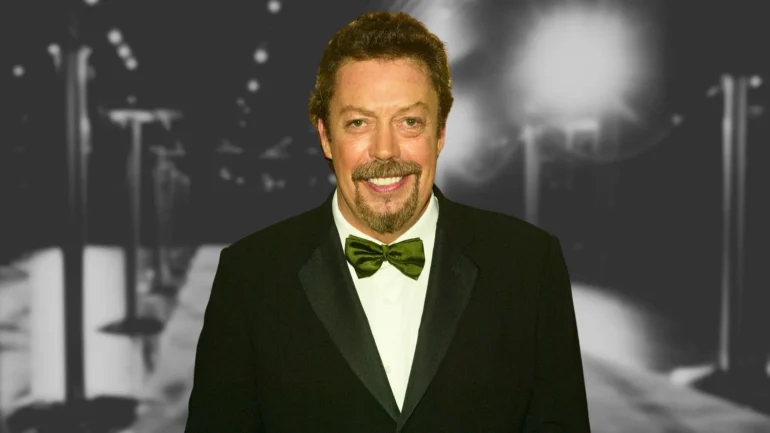
He showed that boldness and discipline are not opposites. His biggest performances worked because every flourish rested on technique. He could make a line funny without crushing the joke and play evil without draining it of charm.
There was also something liberating in the space Curry occupied. He did not sand away his theatricality to become more conventional. He made theatricality his power. Rocky Horror gave generations of viewers permission to be louder, stranger and more fully themselves, and that spirit ran through his entire career.
The voice is silent now, but it remains everywhere: in a midnight theatre packed with costumed fans, in the nervous laughter that greets Pennywise, in Wadsworth’s frantic sprint through Hill House, in Darkness calling from the shadows, in Long John Silver singing with a crew of Muppets and in the opening notes of “I Do the Rock.”
Tim Curry spent more than half a century playing scientists, pirates, kings, clowns, demons, butlers and rogues. He made villains lovable, comedy dangerous and excess look effortless.
There will never be another quite like him.
Similar posts
-
 Now playing
